The modern laundry room far surpasses its purely utilitarian origins, maturing into a intelligently organized yet aesthetically considered extension of the home's overall design narrative. Central to this sweeping transformation is the thoughtful implementation of high-performance cabinetry, which serves as the unsung hero in managing clutter, optimizing workflow, and introducing significant design impact. Moving beyond basic wire racks, today's laundry cabinet design focuses intensely on customization, ergonomics, and material innovation to establish an area where efficiency feels intuitive and style abounds.
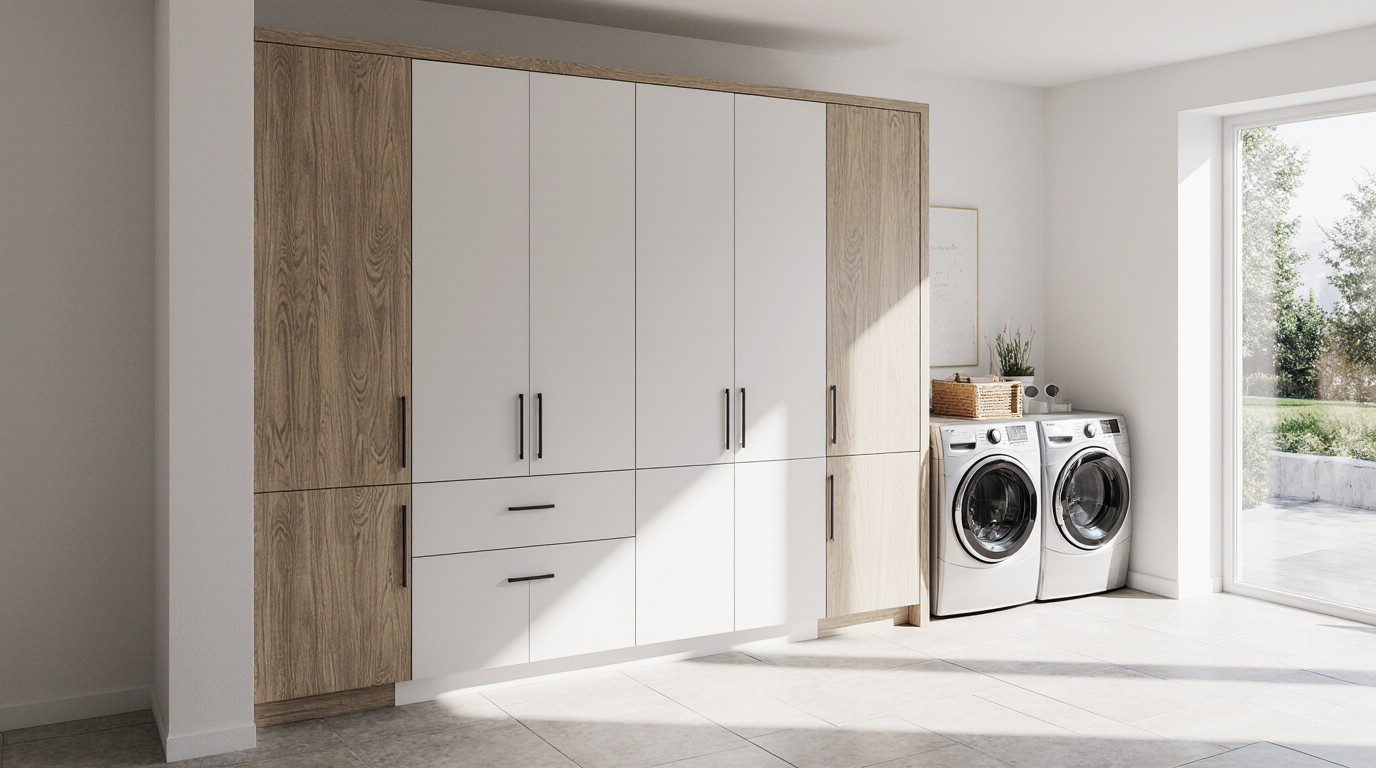
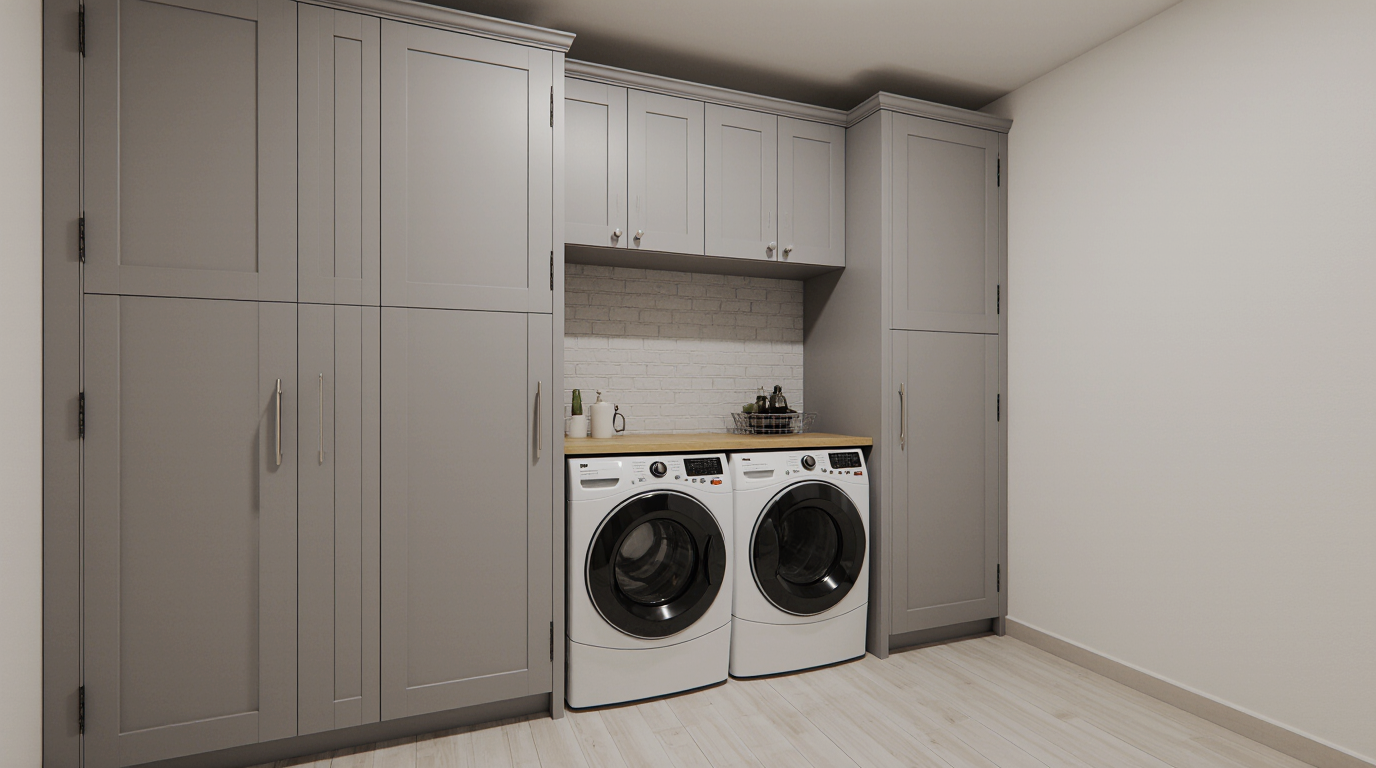
One of the most critical directions in contemporary laundry design involves maximizing vertical real estate through ceiling-height cabinetry. This smart approach converts the room from a simple chore area into a bona fide storage fortress. By placing shelving right up to the ceiling plane, designers fully exploit every available cubic inch, reserving accessible base units for daily necessities like detergent and dryer sheets, while employing the tallest portions for seasonal items, bulk supplies, or specialized cleaning agents. When executed with flush-mounted doors and recessed handles, this look achieves a seamless, integrated look, presenting a unified wall surface that drastically reduces visual noise. For a sleek, modern look, opting for push-to-open mechanisms over traditional pulls cements this seamless façade, granting a minimalist appeal that is much desired in contemporary interiors.
The conversation around laundry room cabinets today must prominently include the concept of multifunctionality. Cabinets are no longer simple enclosures; they are integrated workstations. Consider the cleverness of pull-out ironing board drawers, cleverly tucked away within standard base cabinet dimensions. This negates the need for a cumbersome, freestanding ironing board, preserving precious floor space. Similarly, innovative cabinetry incorporates integrated sorting systems. Imagine a deep drawer bank fitted with whisper-quiet, soft-close runners that houses labeled, pull-out bins for whites, darks, and delicates—a massive upgrade from the standard rolling hamper. These utility-focused drawers ensure that sorting happens in a single location, streamlining the entire laundry cycle from the moment an item enters the room.
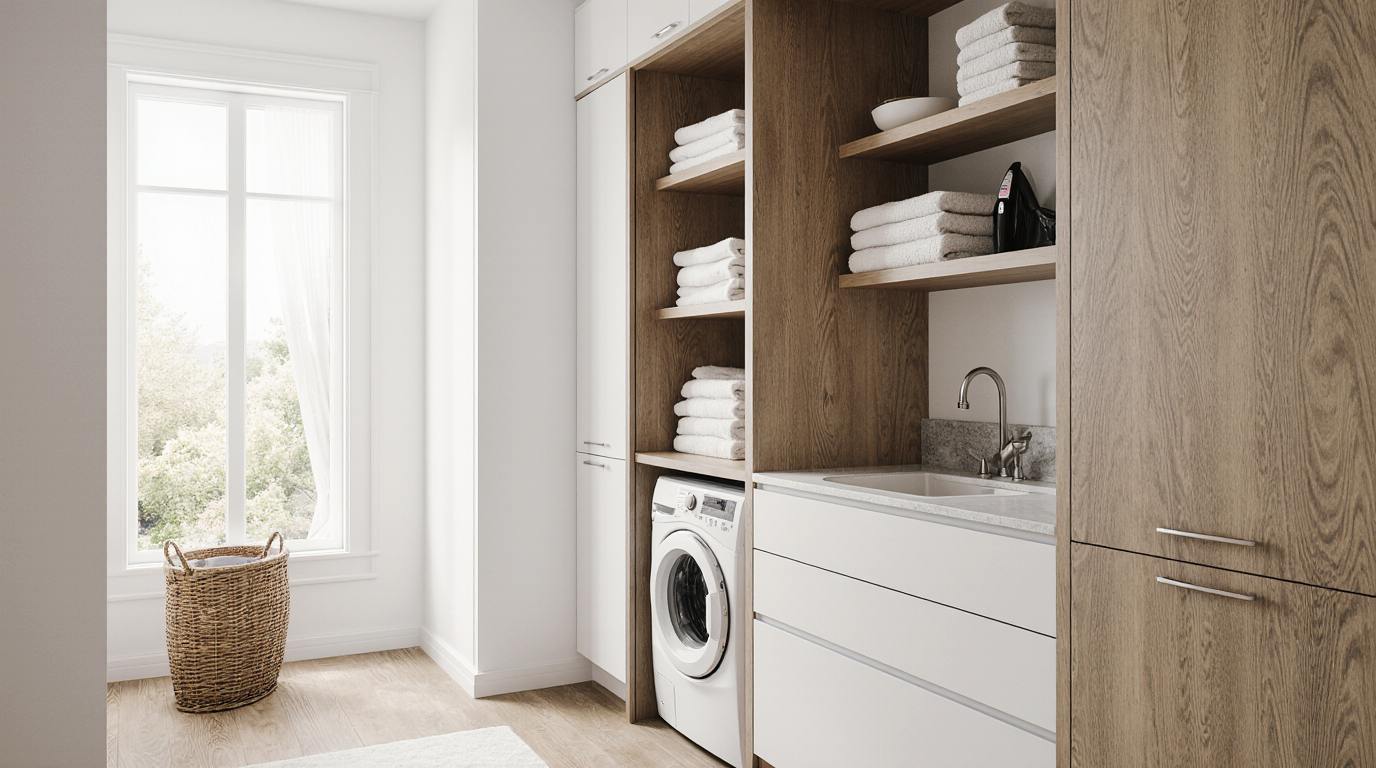
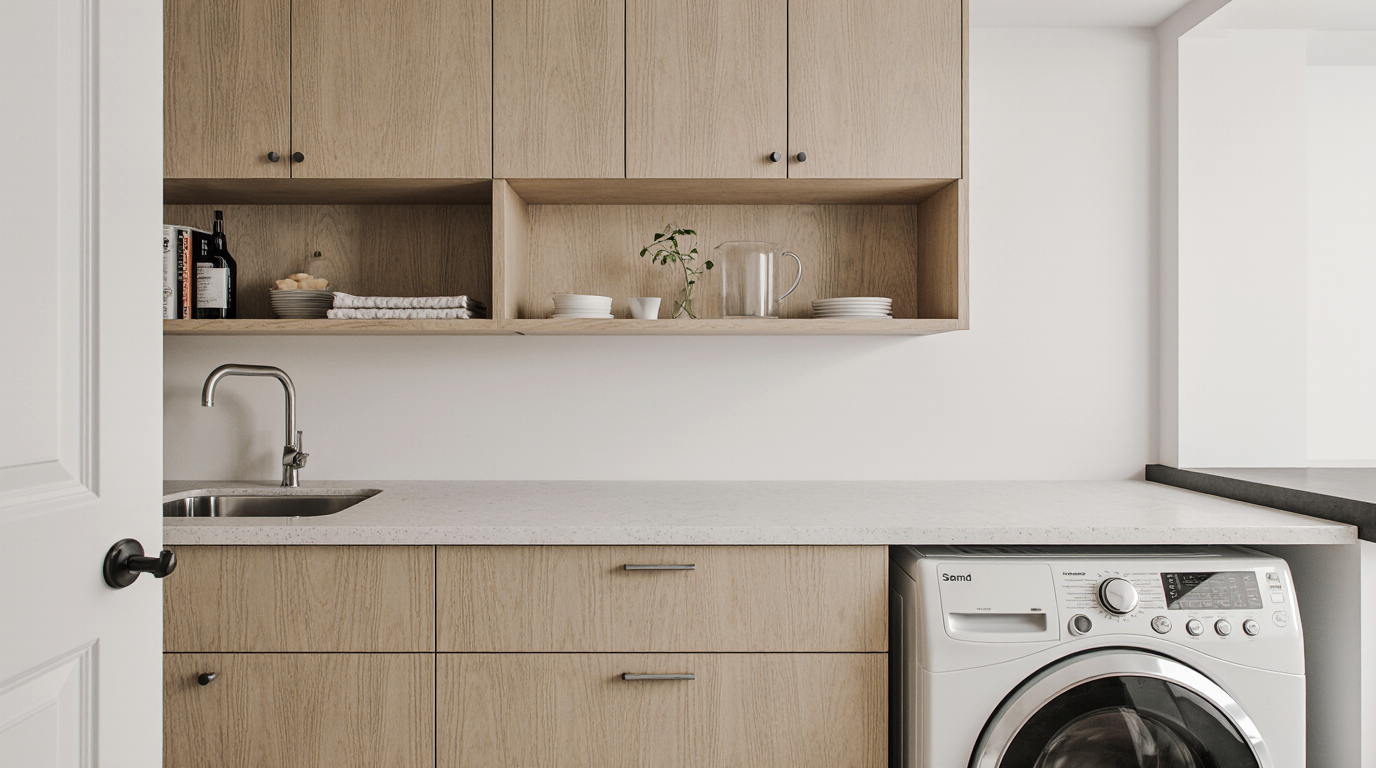
Material selection influences durability and look in this damp, high-use environment. Moisture-resistant substrates are absolutely essential for high-performance cabinetry. While traditional wood is beautiful, modern designers often specify thermofoil or high-quality MDF with durable polyurethane finishes that resist swelling and peeling caused by humidity and accidental spills of bleach or fabric softener. For homeowners leaning toward a warmer, more organic feel, reclaimed wood accents or base cabinets finished in a natural oak veneer provide textural depth, often paired with quartz countertops for superior stain resistance on the folding surface—a definite break from older laminate choices.
Color plays an increasingly bold role. While bright white and soft gray remain timeless foundations, the current trend embraces saturated jewel tones and sophisticated neutrals. Deep navy blue, sage green, and even muted charcoal for the base cabinets provide a solid foundation, especially when contrasted with lighter uppers or open shelving. This approach, often termed two-tone cabinetry, adds visual complexity and allows the room to feel more like a stylized space of the home’s main living areas, rather than a hidden service zone. The introduction of glass-front doors on select upper cabinets can break up a monolithic run of solid panels, providing a stylish chance to display neatly stacked linens or uniform organizing bins, showcasing an adherence to curated organization.
The marriage of closed storage with thoughtfully designed open shelving is another hallmark of superior laundry room architecture. Base cabinets should be reserved for appliances and unsightly tools, such as pull-out containers for trash or recycling. Above the countertop, a balanced application of open shelving allows for decorative touches of items like neatly rolled towels or decorative storage baskets made of woven materials. This mix follows a key organizational rule: closed cabinets handle the bulk of the mundane items, while open shelves manage the decorative elements.
For smaller or more constrained spaces, the concept of the European laundry—where the machines and storage are housed entirely within a deep closet and concealed by pocket or barn doors—necessitates highly efficient, often modular cabinet systems. In these scenarios, under-counter drawer systems designed specifically for laundry tools are crucial. Think about narrow, vertical cabinets housing extendable drying racks that fold flat against the interior door or wall when not in use. Every millimeter must serve a purpose, leading to designs that often feel more akin to a finely tuned galley kitchen than a typical utility space.
The ultimate layer of sophistication involves the cabinet hardware and lighting that complements the chosen finish. For a modern look, long, linear pulls in matte black or brushed brass provide a sharp, contemporary edge against painted surfaces. Conversely, if a Modern Farmhouse or Transitional style is desired, subtler knobs or subtle cup pulls can support the softer aesthetic without competing with textured elements like shiplap paneling on the walls. The hardware selection is the jewelry of the cabinetry, capable of shifting the entire mood of the room from starkly utilitarian to warmly inviting. Ultimately, achieving peak laundry room efficiency via cabinetry is about meticulous planning: ensuring every shelf, drawer, and door contributes to a cleaner line and a more beautiful environment, transforming this work area to a point of genuine design pride. This careful consideration of ergonomic integration and material science ensures the cabinetry system supports the workflow first, the aesthetics second, with the two ultimately becoming inseparable and mutually reinforcing.