Small Laundry Room Design: Transforming Compact Spaces into Functional Luxury
Planning a compact laundry area involves balancing smart design, practicality, and stylish presentation. Careful space planning ensures that even the tiniest laundry room becomes a highly practical and elegant environment. Smart laundry room design elevates everyday routines, boosting both utility and aesthetic sophistication. The key to a successful small laundry room design lies in maximizing storage, incorporating smart appliances, and using visual tricks to create a sense of openness and luxury.
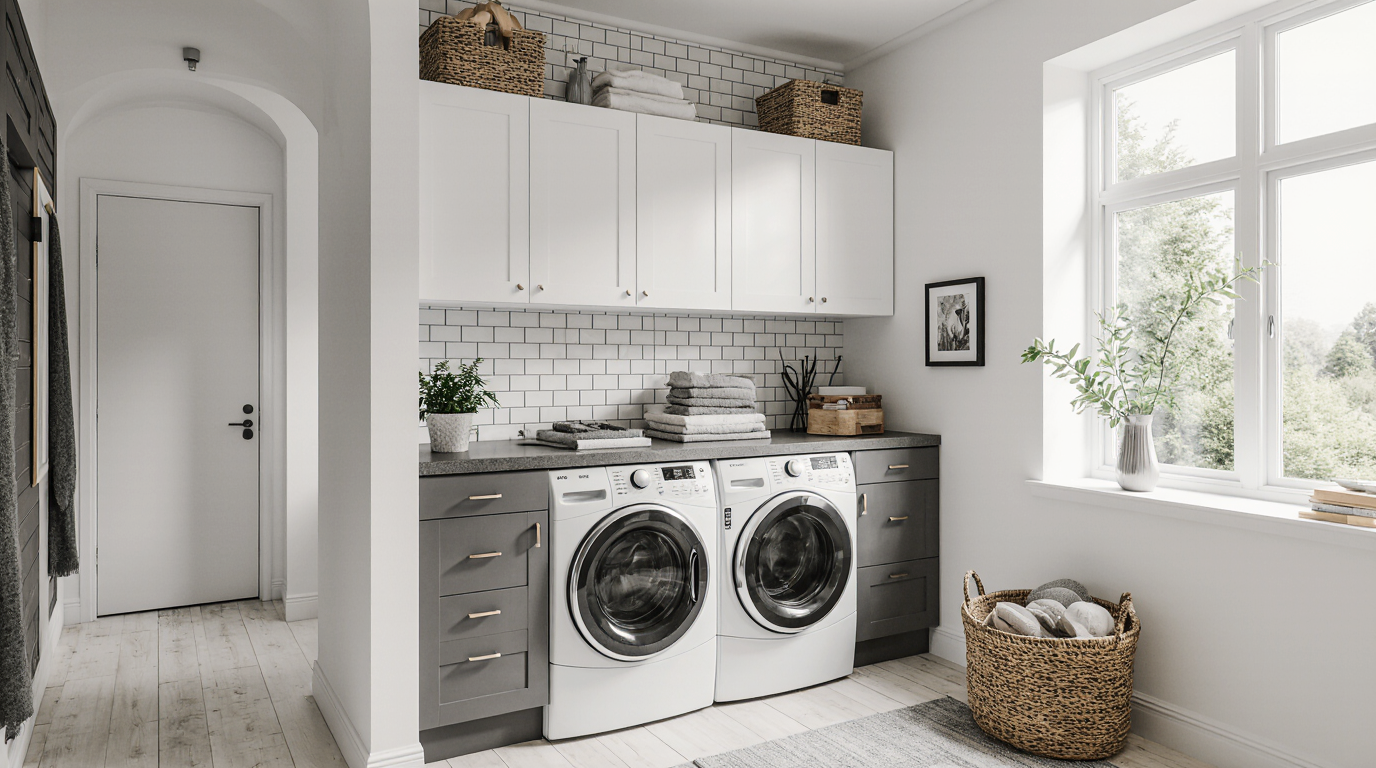
Appliance arrangement is crucial in tight laundry areas. Stackable washers and dryers are a game-changer for small laundry rooms, allowing vertical use of space and freeing up floor area for additional storage or folding stations. High-efficiency models are particularly valuable, offering energy savings while maintaining excellent performance. Encasing machines in tailored cabinetry not only improves style but also promotes an organized, harmonious design. Designers often recommend custom cabinetry around stackable units, which can house detergents, fabric softeners, and cleaning supplies in neatly organized compartments, reducing clutter and enhancing usability.
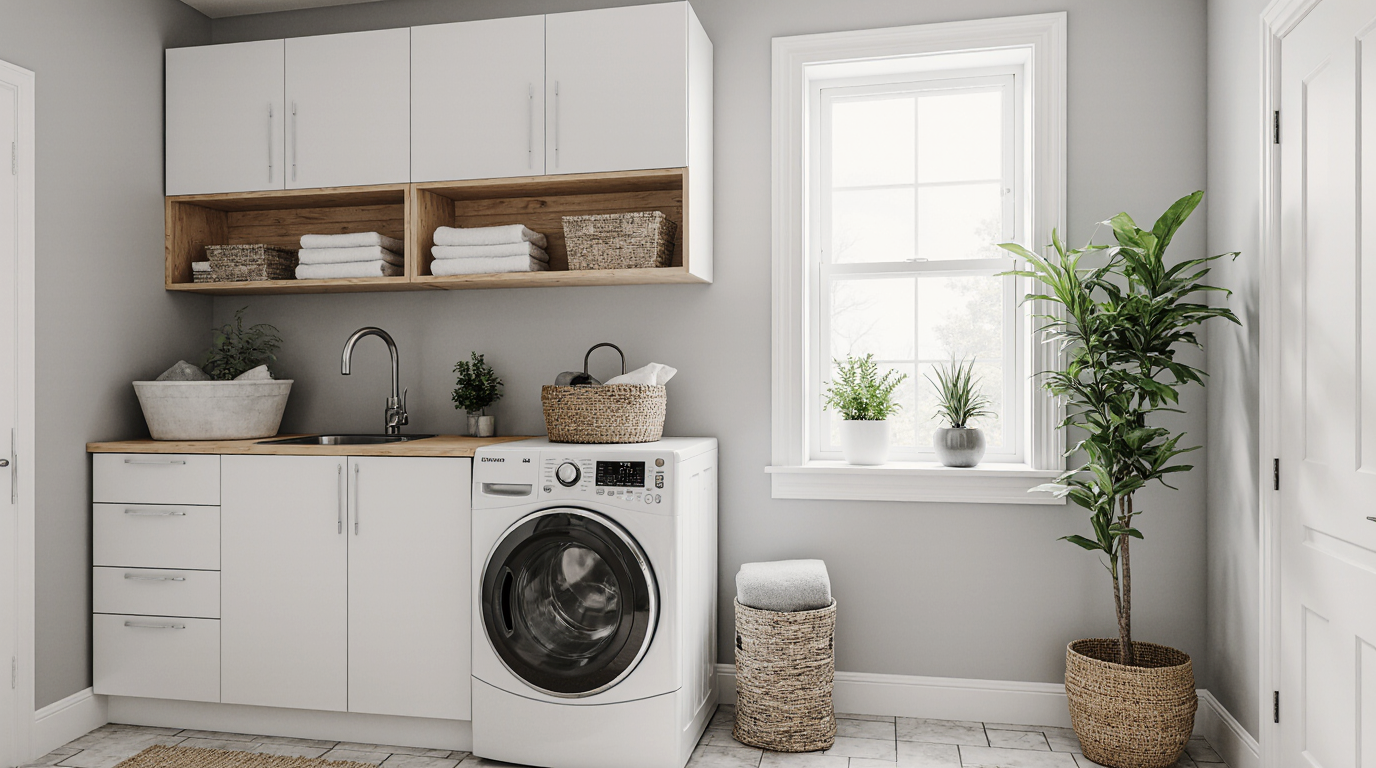
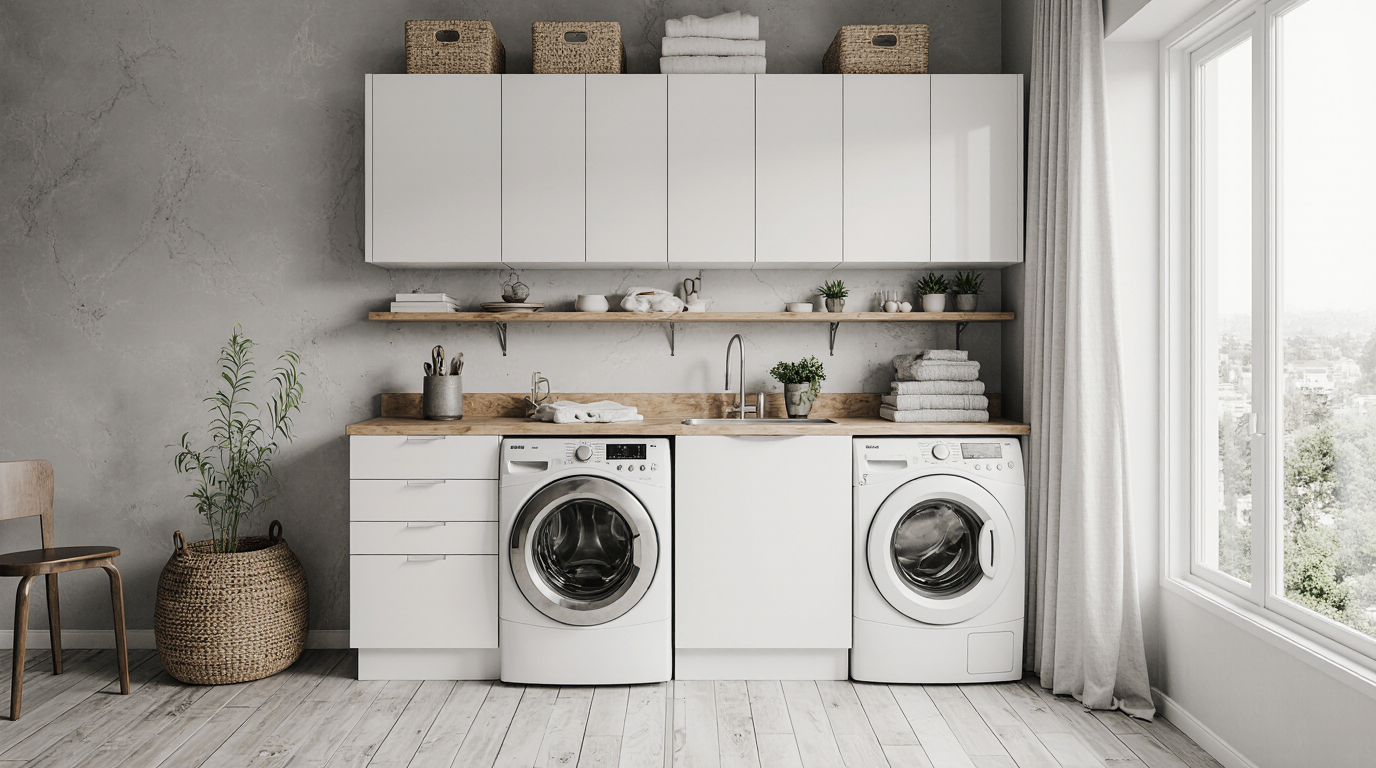
Clever storage combines functionality with aesthetic appeal in tight laundry areas. Open shelves, pull-out baskets, and built-in cabinets can optimize vertical space while keeping items within easy reach. Foldable or retractable racks and ironing boards save space while remaining functional. Every inch of vertical space becomes an opportunity to add functionality without making the room feel crowded. Incorporating concealed hampers and sliding storage ensures tidiness and visual harmony.
Well-planned illumination makes small laundry spaces appear larger and more inviting. Effective lighting improves spatial perception and makes chores more enjoyable. A mix of daylight and strategically placed artificial lighting—recessed, strip, or pendant—creates a bright, welcoming workspace. Even illumination simplifies sorting, folding, and other tasks, enhancing the user experience. Mirrors strategically placed on walls or cabinet fronts can further amplify the sense of space, reflecting light and making the room feel more open than it truly is.
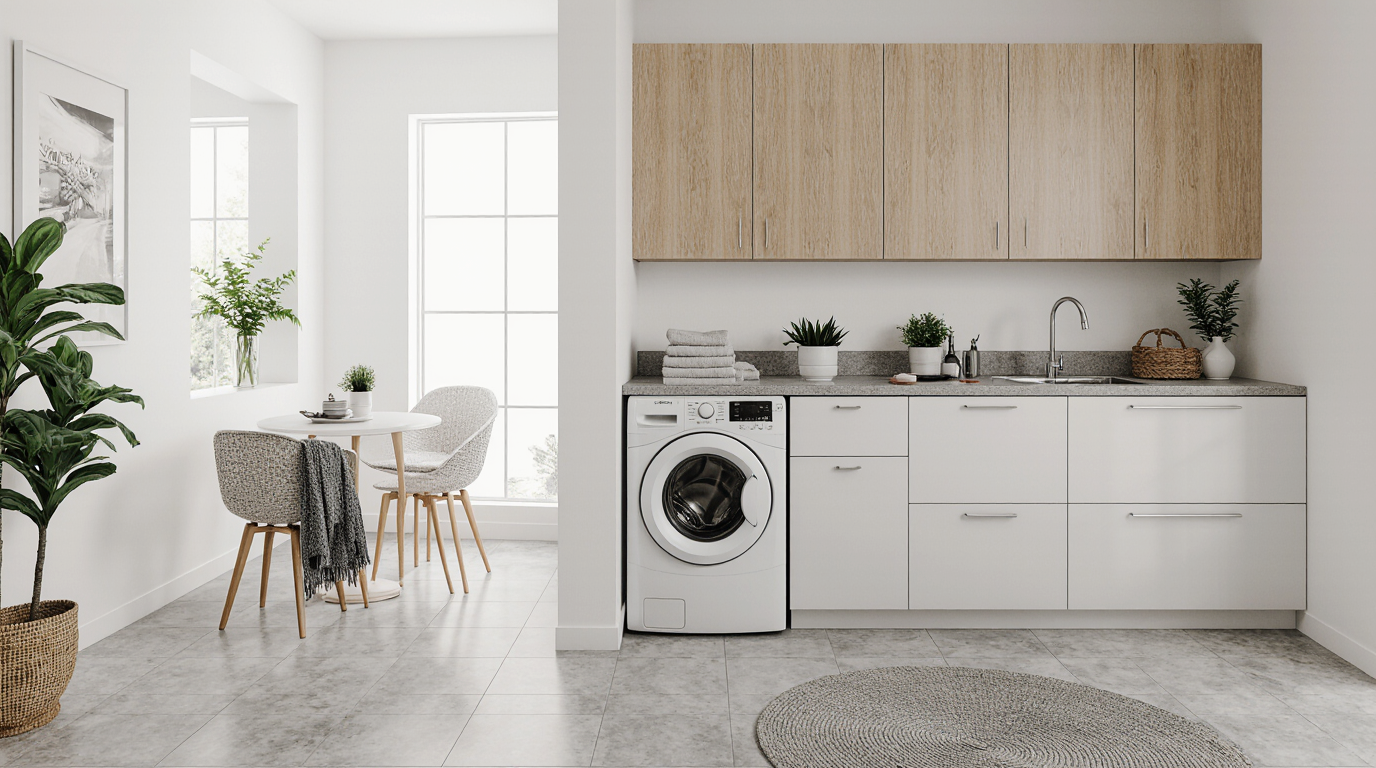
Choosing the right color palette significantly impacts the perceived size and mood of a compact laundry space. Gentle shades of white, gray, or pastel evoke openness and calmness. Accent colors and trim can enliven a small laundry area without creating clutter. Incorporating wood, woven elements, and neutral tones adds depth, warmth, and timeless style. Balanced hues and textures foster visual harmony and a serene, functional laundry space.
Smooth workflow and ergonomic planning make small laundry spaces highly functional. Design should accommodate step-by-step laundry processes, facilitating ease and efficiency. Incorporating a countertop above front-loading appliances can provide an immediate workspace for folding or treating clothes, while a nearby sink offers convenience for handwashing delicate items. Designers often highlight the importance of ergonomic layout in small laundry rooms, ensuring that every element, from shelves to machines, is easily accessible without unnecessary bending, stretching, or lifting. Logical organization and task sequencing enhance usability and reduce stress.
The addition of aesthetic details elevates a small laundry room from purely utilitarian to luxurious. Unique backsplash patterns, refined hardware, and matching storage elevate aesthetics and functionality. Subtle accents like greenery or artwork bring warmth and charm. Minimalist layouts maximize space and conceal clutter, whereas vintage-inspired elements add playful charm. The key is to create a space that is as enjoyable to spend time in as it is efficient to use.
Creative, space-saving features like retractable racks and multi-use islands enhance compact laundry areas. These features allow the room to adapt to different tasks without requiring additional square footage. Multi-functional furniture or modular units can also expand storage and usability, making even the most compact space highly versatile. Countertops serve dual purposes as folding surfaces and styling platforms.
Sustainability is another important consideration in modern small laundry room design. Sustainable appliances and fixtures conserve resources and reduce utility bills. Contemporary laundry rooms emphasize both green practices and sleek design. Energy-smart machines and recycled materials promote green living while maintaining design sophistication.
Maintaining order and minimizing clutter enhances both functionality and aesthetics in tight laundry spaces. Strategic storage solutions facilitate organization and reduce visual chaos. Smart placement of items by frequency optimizes workflow. An orderly, intentional layout transforms a compact laundry space into a sustainable, attractive environment.
From storage to aesthetics, each design choice shapes the room’s usability and ambiance. By combining strategic storage, smart appliances, thoughtful lighting, and aesthetic touches, even compact laundry spaces can become highly functional, organized, and luxurious. Creative, meticulous design elevates overlooked laundry areas into integral, stylish parts of the home. With the right balance of form and function, small laundry rooms can transform from cramped, chaotic spaces into highly efficient, stylish, and enjoyable environments where practicality meets elegance.